The Titlis Cliff Walk in 150 steps
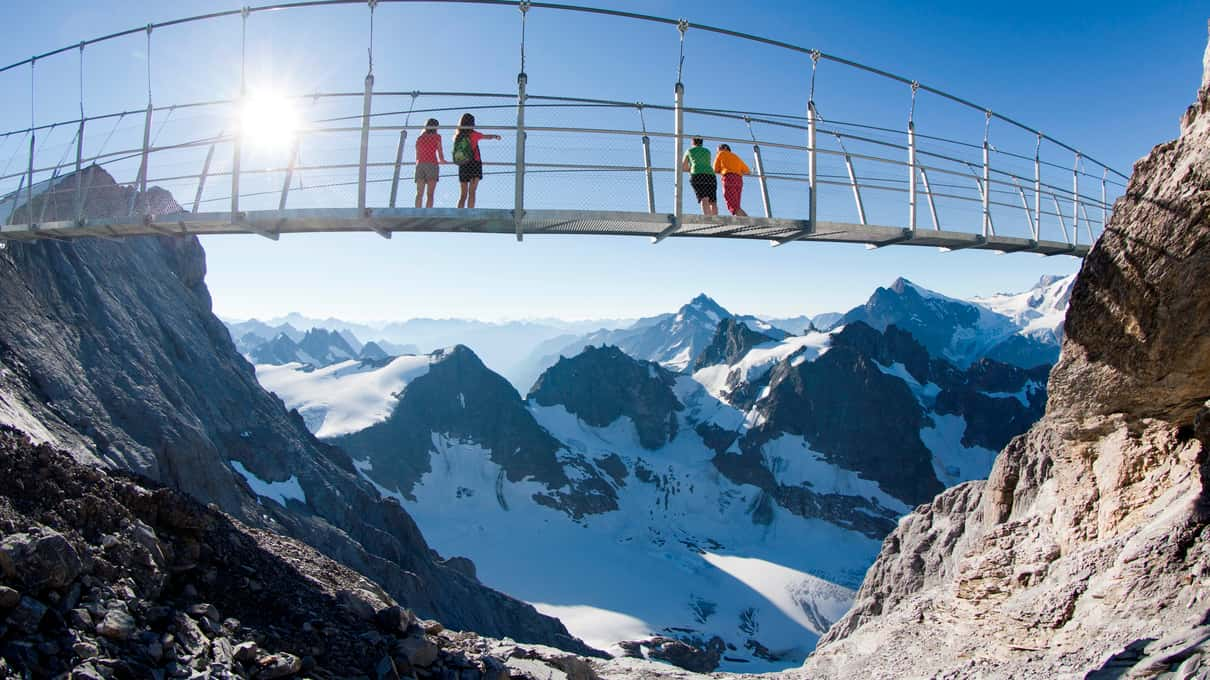
A footbridge one meter wide, hung between two rock walls at 3,041 m (9,977 ft), with a lot of nothing underneath. Crossing it takes a few minutes and no extra money. What decides whether you get to do it is the wind, and how long your tour leaves you up there.
The bridge in figures
The Titlis Cliff Walk opened in December 2012 and runs 100 m (330 ft) along the mountain. It is 1 m (3 ft) wide, so two people meeting halfway have to turn their shoulders.
| What | Figure |
|---|---|
| Height above sea level | 3,041 m (9,977 ft) |
| Length | 100 m (330 ft), about 150 steps |
| Width | 1 m (3 ft) |
| Drop below | 500 m (1,640 ft) |
| Extra cost | None with a return ticket to the top |
| Time tours set aside | 15 minutes where a plan gives a figure |
It is billed as Europe's highest suspension bridge, a line the cableway shares with the railway and the tourist board. Wikipedia is a notch more careful and writes "believed to be". Either way, your stomach will not ask for the paperwork.
Who pays for it, and who never gets there
Anyone holding a return ticket to the top can cross for nothing, and the Glacier Cave comes on the same terms. That covers the three coach days with the cable cars included and the cableway's own ticket.
The other two among the Mount Titlis day trips from Zurich need a closer look. The beginner ski day goes only as far as Trübsee unless you book its option with the top, and the Lucerne and Engelberg coach has no cable car in the fare at all.
- Best of Switzerland's day at ~$225: bridge named in the program, about one hour on top for everything
- Keytours at ~$201: bridge included, 15 minutes for it on the Viator plan, inside the 2.5 free hours on GetYourGuide
- Gray Line at ~$214: 15 minutes for the bridge besides roughly two hours on top
- The cableway's own ticket at ~$136: bridge included, and you set the clock yourself
If you were leaning toward the valley coach, read what that day does without the cable car first. The bridge is far above anything you will stand on there.
How the crossing feels
Expect a little movement under your shoes, as on any suspension bridge. Most of the fear sits in the first twenty steps. After that you find a rhythm, and somebody in front stops for a photo and breaks it again.
You can walk out, look down, and come straight back. At the far end is the Ice Flyer, the chairlift over the glacier, so people with that ticket can join the two. Our page on who has the chairlift in the fare sorts out which tours that means.
Knees that vote against the idea deserve a hearing. Nobody has to cross, the panorama from the station area is the same mountains, and waiting at the near end with the camera is an honorable job.
Wind and ice decide, so ask early
The bridge can close for wind or for ice. MeteoSwiss, the Swiss weather service, measures an average of about 30 km/h (19 mph) at its Titlis station from December to February. From May to September the figure is about 20 km/h (12 mph).
That makes the warm half of the year the safer bet for crossing, although no month comes with a guarantee. A calm January morning exists, and so does a July day when the bridge stays shut. Our notes on choosing a month put temperature and wind side by side.
When only the bridge is closed, your tour still goes up, and none of the six promises it. The pages handle a closed mountain differently, which we laid out in who refunds what in bad weather.
Fitting it into one hour
On our pick, both booking pages limit the visit on top to about one hour while the top station is being rebuilt. That hour has to hold the bridge and the Glacier Cave, then the Ice Flyer, with whatever lines have formed. Nothing about it is leisurely.
We would go to the bridge first. It is the part most likely to shut if the wind picks up, and the cave, 10 m (33 ft) below the surface, does not care about gusts. The chairlift comes next if the line is short.
With two hours or more you can afford to wait for a gap between groups and have the bridge nearly to yourself. What fits into one, two or three hours goes through the options in more detail.
Mountain first, Lucerne second
Gray Line heads straight for Titlis and sets 15 minutes aside for the Cliff Walk. The whole day takes 9 hours and starts at 10:00 am.
Gray Line's record is shorter than that of the bigger names, with 4.7 from 150+ reviews on GetYourGuide and the same score from 190+ on Viator. Its guests mention an Ice Flyer stopped by wind, and once a storm that closed the whole top.
Shoes, hands and the thin air
The average temperature at 3,040 m is −10 °C (14 °F) in January and a mere 4 °C (39 °F) in July. Wind makes both feel colder, so gloves belong in your pocket even when Zurich is in shorts.
- Closed shoes with grip; Gray Line turns away open-toed ones
- A windproof jacket that zips to the chin
- Sunglasses and sun cream, since snow throws the light back up
- A strap for the phone, because 500 m is a long way to go and fetch it
At this height the air is thin enough to notice on stairs. Walk slowly, drink some water, and ask a doctor beforehand if you are unsure. Our pick's page rules out people with heart problems or other serious medical conditions.
A footbridge one meter wide is no place for a stroller. All five coach days say they are not for wheelchair users, and the two pages of the cableway ticket disagree with each other, so put the question to the cableway.
Getting there from Zurich
The last cabin up is the Rotair or its plainer stand-in, and which of the two you will ride depends on the calendar. Without lines the trip from Engelberg to the top takes about 30 minutes.
If the bridge is your reason for going, choose by hours on the mountain rather than by price alone. You can compare the six Titlis days in one table, or read the catch of each one under the Titlis tours from Zurich.